Beginner’s Guide: Sólheimajökull Glacier Hike
Ah, velkomin! My name is Otto the Viking, and if you’ve found your way here, chances are you’re curious about walking on ice older than your family tree. Today, I’ll take you—through my eyes and boots—on an adventure across Sólheimajökull, one of Iceland’s most accessible and awe-inspiring glaciers. Whether you’re dreaming of your first ice hike or already have crampons waiting by the door, this guide will prepare you to conquer the glacier like a true Viking.
Before we set foot on the ice, let me tell you a little about this frosty giant. Sólheimajökull is an outlet glacier of the mighty Mýrdalsjökull, which cloaks the Katla volcano—yes, an active one. Don’t worry, she’s been sleeping quietly for a while, but her fiery energy still hums beneath the surface. The glacier itself is a living creature, constantly shifting, groaning, and reshaping itself as it flows slowly toward the valley. Every time I visit, she’s different—sometimes steeper, sometimes streaked with volcanic ash that gives her a marbled look, like blue ice cream swirled with black licorice.
For us Icelanders, glaciers are sacred. We call them jökull, a word that rolls off the tongue like snow melting into a stream. Hiking here isn’t just about adventure—it’s about stepping into the rhythm of nature itself.
When guests join my tours, they often arrive wide-eyed, unsure of what awaits. I remind them: you don’t need to be an athlete to walk a glacier, but you do need to respect her. The Sólheimajökull hike is perfect for beginners—it’s a moderate, 2–3 hour adventure suitable for most ages and fitness levels. The key is proper gear.
Here’s what I always recommend:
- Warm, layered clothing – The glacier is colder than the surrounding land, and the weather changes faster than a Viking mood. Think thermal base layers, a windproof shell, and a waterproof jacket.
- Hiking boots – Sturdy, ankle-supporting boots are essential. The ice is uneven and full of surprises.
- Hat and gloves – Even in summer, the wind can bite.
- Sunglasses – The glare off the ice is blinding on sunny days.
- Camera – Trust me, you’ll want to remember this.
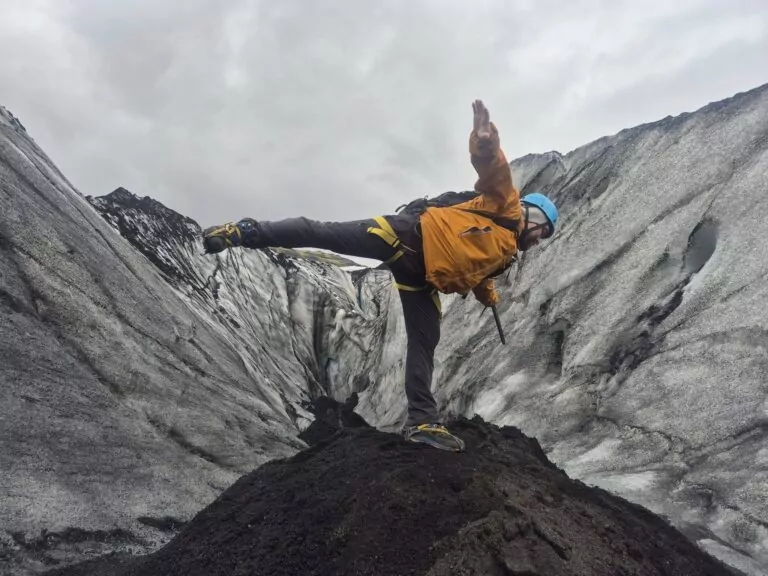
Your guide—me, or one of my glacier comrades—will provide crampons, helmets, harnesses, and ice axes. They’re not just for show; they help you stay steady and feel like an explorer from another age. The first few steps with crampons always feel clumsy, but soon enough, you’ll be crunching across the ice with confidence.
We start at the base, where the glacier tongue reaches toward the lagoon below. Meltwater pools shimmer with an eerie blue glow, and chunks of ice drift lazily across the water. The sound is unforgettable—a symphony of cracking, dripping, and the occasional distant rumble.
Before we climb, I teach everyone how to walk with the Viking step: feet slightly apart, knees bent, and crampons digging into the ice like claws. You’ll hear a satisfying crunch-crunch—the sound of trust between your boots and the glacier.
As we ascend, the world transforms. Crevasses open up like deep blue scars, their color so vivid it looks almost artificial. Streams of meltwater carve delicate channels, and sometimes we find small ice caves glowing like sapphire cathedrals. If you listen closely, you can hear the glacier breathing—tiny pops and crackles that remind you she’s alive.
Guiding isn’t just about safety—it’s about storytelling. I like to imagine Sólheimajökull as a keeper of tales, whispering memories from centuries past. Some ice here is more than 500 years old, formed long before cars, cameras, or tourists in neon jackets. Beneath our feet lies time itself, frozen in motion.
I tell my guests about Vikings who once crossed glaciers to hunt seals or explore uncharted fjords. They didn’t have crampons or GPS—just guts and instincts. I may not wear horned helmets (a myth, by the way!), but I like to think their spirit lives on in every step we take.
Sometimes I pause and let silence take over. That’s when the magic hits—the stillness, the purity, the reminder that we’re walking atop a vanishing world. Glaciers like Sólheimajökull are retreating due to climate change, shrinking more each year. What we see today might be gone in a few decades. So every hike is both an adventure and a farewell.
At the top of our route, we stop for a rest. The view stretches out toward the black sand plains of Sólheimasandur, where the Atlantic crashes far below. The contrast between fire and ice, black and white, earth and sky—it’s the essence of Iceland in one breathtaking panorama.
We drink water straight from a glacial stream—it’s the purest you’ll ever taste. Some guests bring a small bottle to take home, a souvenir of the ice that once touched the sky.
The descent is easier, but bittersweet. By now, everyone walks with Viking confidence, no longer tentative, but sure-footed and exhilarated. When we reach the base, I always take a moment to thank the glacier—quietly, with a hand over my heart. She’s given us a glimpse into her frozen soul, and that deserves respect.
Back at the parking lot, as we unstrap our crampons and sip hot chocolate, the group always looks different—rosy cheeks, sparkling eyes, and that unmistakable grin of someone who’s conquered something ancient and powerful.
So, if you ever find yourself on Iceland’s south coast, near the village of Vík í Mýrdal, come find me—Otto the Viking. I’ll be the one with the braided beard, a thermos of coffee, and a mischievous grin. Let me show you the world of ice and fire the way it was meant to be experienced: through stories, footsteps, and the spirit of adventure.
Remember: the glacier doesn’t care who you are—he welcomes everyone brave enough to walk his path. So lace up those boots, grab your courage, and join me on Sólheimajökull, where the heart of Iceland beats beneath the ice.